

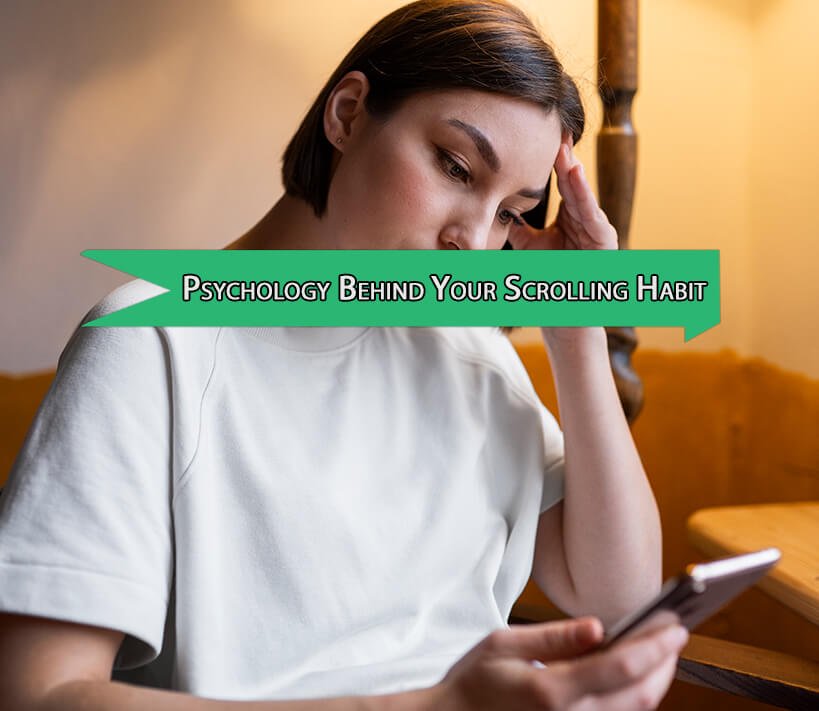
Have you ever unlocked your phone to check the time, start scrolling, and find yourself watching videos for 40 minutes? You start watching videos and responding to notifications, travel vlogs, memes, or random content from social media. Endless scrolling has become a habit for almost everyone, and it is not just a modern technology trend but also a deeper reflection of the psychology behind it. It is a psychological phenomenon that is crafted to capture your attention. The way we scroll online content is connected to how our mind works and what interests us the most. In this blog, we will talk about the psychology behind your scrolling habit.
Key TakeAways
- Social validation affects engagement patterns.
- Notifications encourage repeated app usage.
- Time limits encourage mindful usage.
- Mindful habits can replace excessive scrolling.
- Reading offers a healthier alternative to endless feeds.
Interesting Facts About Scrolling and Social Media
- FOMO encourages frequent social media checking.
- Social validation influences online behavior.
- Social comparison occurs automatically while scrolling.
- Many users feel anxious when disconnected.
- Social media influences cultural trends globally
THE ATTENTION ECONOMY
Many digital platforms are designed to keep us engaged by showing content that we want to see and making it difficult to put our phones down. Our time and attention act as valuable currencies for digital media platforms. Many social media companies compete for every second of your focus because more attention means more advertising revenue. These platforms constantly analyze your behavior, what you watch, what you skip, what you like, and search for a particular post. Every interaction provides data that helps algorithms create personalized experiences. They fill your feed with content you are looking for.
These platforms constantly try to grab your attention and keep you engaged for long periods of time without realizing it. The result is a feed tailored specifically to your interests, making it difficult to stop. This continues to capture your attention and make you addicted to scrolling.
THE DOPAMINE TRAP
It is one of the most important elements of the psychology behind your scrolling habit. Dopamine is the neurotransmitter associated with pleasure, motivation, anticipation, and reward. Whenever you watch funny memes, entertaining videos, or any interesting reels, your brain receives a dopamine boost. This boost encourages you to continue this behavior and spend hours and hours scrolling. What makes scrolling particularly addictive is unpredictability. You never know when the next exciting content will appear. This unpredictability keeps you engaged and makes it more difficult to stop scrolling until the next reward appears.
FOMO
We, humans, are social animals who naturally seek social connection and a sense of belonging. Throughout history, staying informed about society has contributed to survival. When individuals join social gatherings and see others discussing trending topics, viral videos, and breaking news, they may worry about being left out. This fear creates anxiety and encourages frequent checking and refreshing social media feeds. Many platforms use this fear to keep you checking, scrolling, and refreshing. You do not want to miss what is happening, even if what is happening is not that important.
THE COMFORT OF ESCAPE
Life is stressful. Sometimes, work stress, relationship issues, and constant new updates can feel overwhelming. For many people, scrolling works as an emotional escape for them. They watch funny memes, videos, and entertainment videos with little effort. As a result, scrolling becomes an automatic response to anxiety and stress. This automatic response is known as emotional avoidance.
MICRO DOSES OF SOCIAL VALIDATION
When we post something on social media, we often seek social approval through likes, comments, and shares. Every notification signals acknowledge from others, creating a sense of approval and recognition. This Social approval activates reward pathways in the brain. As a result, many people check their phones repeatedly to monitor engagement with posts. Each like, comment, and share provides a sense of satisfaction and social approval. This behavior encourages people to return to the platform more frequently. Over time, this cycle can increase dependence on external validation.
THE JUST ONE MORE EFFECT
Have you ever noticed how app designers reduce friction? You do not need to think. Just keep flicking your thumb. When we scroll on social media, we have no clear point to stop or pause because one piece of content just leads into another. This creates just one more effect, making it difficult to stop scrolling. You spent hours and hours on social media platforms until you realized how much time you had wasted.
HOW TO REGAIN CONTROL OF YOUR SCROLLING HABIT
1. CREATE FRICTION
Remove distracting apps from your home screen and disable unnecessary notifications to reduce impulsive scrolling habits.
2. SET TIME LIMIT
Set a time limit for mobile usage. You can use screen time tracking tools to monitor usage. It will help you spend fewer hours on social media.
3. REPLACE SCROLLING WITH MINDFUL HABITS
Reading, walking, stretching, or meditation are habits that can help you gain control over your scrolling habit.
4. CURATE YOUR FEED
Follow people who inspire or educate you, and unfollow accounts that trigger anxiety, FOMO, and unhealthy comparison.
5. Start Your Day Without Your Phone
Many people check their phones immediately after waking up, but it ends up in the form of scrolling. So, try to avoid using the phone for at least 30 minutes.
Conclusion
The psychology behind your scrolling habit shows us that we do not always scroll because we want to, but often because digital algorithms influence our behavior and encourage us to keep scrolling. Sometimes, we scroll to escape emotions, seek reward, or gain social approval. Everything has its pros and cons. It is not entirely bad as it connects people, entertains us, and keeps us informed about what is happening in the world. However, the problem starts when scrolling becomes automatic instead of intentional. If you are struggling with phone addiction, you can visit the best psychologists in Rawalpindi at Psychoaura for expert guidance and support.
FAQs
Does Psychoaura offer affordable sessions?
Yes. Psychoaura is providing affordable sessions. You can take them anytime and at your preferred time and date.
What are the simple habit that helps reduce scrolling?
Short walks, stretching, reading, spending time in nature, and meditation help reduce scrolling.
How can I book a session with psychologists at Psychoaura?
You can book an appointment through the official website or directly contact Psychoaura through phone number or social media pages.